
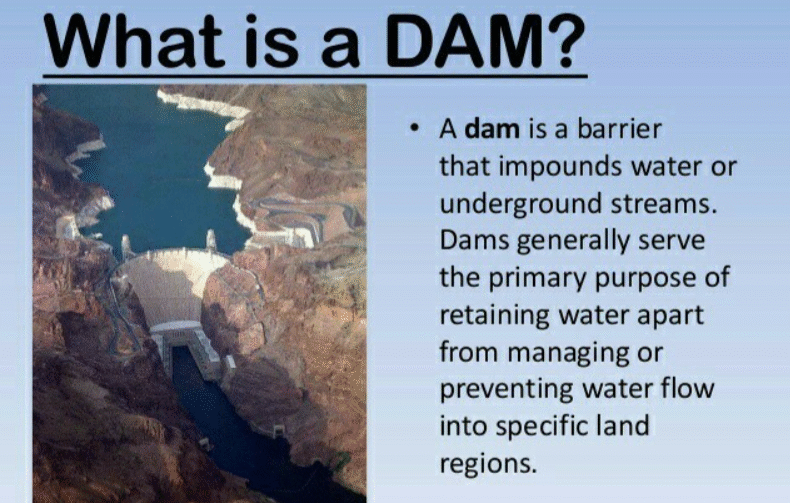
What is Dam? its Advantages and Disadvantages
Dams have been long regarded as emblems of human technology and advancement. They range from the Bhakra Nangal Dam located in India up to Hoover Dam in the United States and the Three Gorges Dam in China The massive structures are the efforts of mankind to manage rivers, harness water and create energy.
In 2025, there were more than 58,700 dams that are large across the globe (International Commission on Large Dams – ICLOLD 2024) and India alone is home to more than 5,700 dams and is the third-largest dam-ownering nation, following China as well as China and the United States. Dams play an important part in the fields of agriculture, energy water supply, and in flood control. However, they also impose environmental, social, as well as economic costs that cause controversy across the globe.
Let’s look at the benefits and drawbacks of dams:
Advantages of Dams
1) Water Storage and Supply
One of the greatest benefits of dams is the water storage. They serve as artificial reservoirs which conserve water for various uses like:
- A water source for urban areas.
- Irrigation to help with agriculture.
- industrial use for power and factories. plants.
For instance it is for instance, the Sardar Sarovar Dam located in Gujarat supplies water to more than 9000 townships and villages and towns, turning drought-prone regions into productive farms.
2) Irrigation Benefits
Agriculture is the mainstay of nations such as India in which more than 40 percent of the population is dependent on agriculture. Dams permit controlled irrigation through the channeling of stored water into fields and canals. As per the Indian Ministry of Jal Shakti (2024) Major and medium dams play a role in irrigation of over 17% of the country’s agriculture land as well as guaranteeing food security.
3) Hydroelectric Power Generation
Hydropower is a green and renewable energy source, dams allow it. In the case of Tehri Dam in Uttarakhand is an example. It produces over 11,000 MW power which reduces dependence on fossil fuels. Hydropower is the most important source of electricity worldwide, accounting for 15% of the total electricity production (International Energy Agency 2024).
4) Flood Control
Dams assist in regulating river flow and manage flooding. By storing water that is not needed in heavy rain and slowly releasing it, they protect downstream settlements. It is the Hirakud Dam in Odisha has managed to stop regular floods within the Mahanadi basin for many years.
5) Tourism and Recreation
Many dams are now popular tourist spots. Activities such as fishing, boating and exploring reservoirs help local economies. For instance Bhakra Nangal Dam is one of them. Bhakra Nangal Dam draws thousands of visitors each year, which generates additional income for the area.
6) Employment and Infrastructure Development
Dam construction projects offer huge-scale opportunities for laborers, engineers and communities. They also enhance infrastructure such as bridges, roads, as well as townships in the vicinity.
7) Inland Navigation
Reservoirs that are created by dams be used to support navigators and waterways in the inland which makes the transportation of products more effective. While India has not fully utilized this potential nations like China have utilized dams for water-based transportation.
Disadvantages of Dams
Although dams are a proven source of advantages, they also have serious disadvantages.
1) Displacement of People
One of the main criticisms of dams is the massive relocation of entire communities. Millions of people across the globe have been forced out of their homes because of dam projects. In India the Narmada Bachao Andolan exposed the hardships of those who were forced to leave their homes from their homes by Sardar Sarovar Dam which saw many were displaced not just from their homes, but also their livelihoods.
2) Environmental Damage
Dams alter ecosystems that are natural. They cause forests to be submerged, alter wildlife habitats, and alter the ecology of rivers. It is reported that the World Wildlife Fund (WWF 2024) notes that nearly 1/3 of fish in fresh water species is endangered due to habitat changes caused by dams. In India the construction of Tehri Dam was a major factor. Tehri Dam submerged entire villages and forests forever altering nature of the Himalayan ecosystem.
3) High Construction and Maintenance Costs
Large dams require massive investment that could amount to millions of dollars. For example the Chinese Three Gorges Dam cost more than thirty billion. In many instances the financial burden is greater than the benefits, particularly in countries with poor infrastructure in which maintenance funds are not plentiful.
4) Risk of Dam Failure
Dam failures, while uncommon, can be devastating. In 1979 in 1979, the Machchu Dam in Gujarat fell over and killed more than 2000 people. Changes in climate, rising frequency of rainfall, and the deterioration of infrastructure makes dam safety a significant problem by 2025.
5) Sedimentation Problem
In time, rivers deposit silt into dam reservoirs, which reduces the capacity of storage and the efficiency. In the Indian Central Water Commission (2024), many reservoirs in India have lost 20-30 percent of their capacity for storage because of sedimentation.
6) Impact on Downstream Communities
Dams alter the flow of natural rivers which reduces the flow of water to areas downstream. Fishermen, farmers and villages situated downstream are often affected by water shortages. For example, areas downstream in the Krishna River basin have experienced water shortages following the construction of a series of upstream dams.
7) Social Conflicts
Large-scale dam construction projects can cause social tensions and conflict between regions or states about water-sharing. For example, conflicts with Karnataka as well as Tamil Nadu over the Cauvery River show how dams can increase regional and political tensions.
8) Contribution to Climate Change
Although hydroelectric dams are regarded as renewable, studies (IPCC 2024) indicates that reservoirs could release significant quantities of methane methane, an greenhouse gas, due to the decay of organic matter beneath the water. This is in contrast to the assertion that dams are completely “green.”
Dams in India: The 2025 Picture
- Dams total: Over 5,700 completed and more than 300 still under construction.
- The largest dams Bhakra Nangal and Sardar Sarovar Hirakud and Tehri.
- Share of hydropower: About 12 percent of India’s electricity generation is derived from hydropower.
- Issues: Aging infrastructure (many dams are older than 40-50 years) displacement, and environmental issues.
Global Perspective
- China is leading with more than 23,000 dams of large size which includes The Three Gorges Dam which is the world’s biggest hydroelectric power project.
- USA contains over 9,200 dams Many of them were constructed during the 20th century.
- Africa has been rapid in the construction of dams to meet its energy and water requirements, but it is concerned regarding environmental harm (e.g. the Ethiopian Grand Renaissance Dam).
Balancing the Pros and Cons
Experts recommend experts recommend a more balanced method for dam management and construction
- Dams that are smaller, more eco-friendly instead of large-scale projects.
- Rehabilitation in the proper way of communities who have been forced to relocate.
- Sediment management techniques to prolong reservoir life.
- Renewable energy sources (solar and wind) to lessen dependence on dams that are large in hydropower.
- International collaboration for transboundary river crossings to prevent conflict.
Conclusion
Dams can be both blessings and curses of our modern world. Their benefits in terms of water supply and power generation, irrigation and flood control are undisputed. But they also have disadvantages such as displacement, environmental damage as well as high costs and the risk of safety are what make them controversial.
By 2025, the discussion about dams will not be about whether or not they should be built or not, however, what they should be designed and controlled. Due to climate change, increasing population, and increasing water shortage dams will continue to serve a vital function. To truly benefit humanity, they need to be constructed and operated with the equilibrium of environmental, development and the pursuit of social justice.
Leave a Reply